I admit that the title of the piece is a hyperbole(maybe), but alas this is an opinion essay so allow me to engage in some speculative conjecture.
One habit I have picked up lately is browsing op-eds in the legacy media. I particularly enjoy reading the liberals’ appalled reactions, not without some schadenfreude I admit, to some of the developments of this fuzzy new world. Just look at the title of this piece from The Washington Post below reacting to Senator Bernie Sanders’ proposal for a 50% government stake in frontier AI companies. Or look at Vox’s Eric Levitz reacting with disbelief to US Governments’ decision to impose export controls on Anthropic’s latest model, Fable.
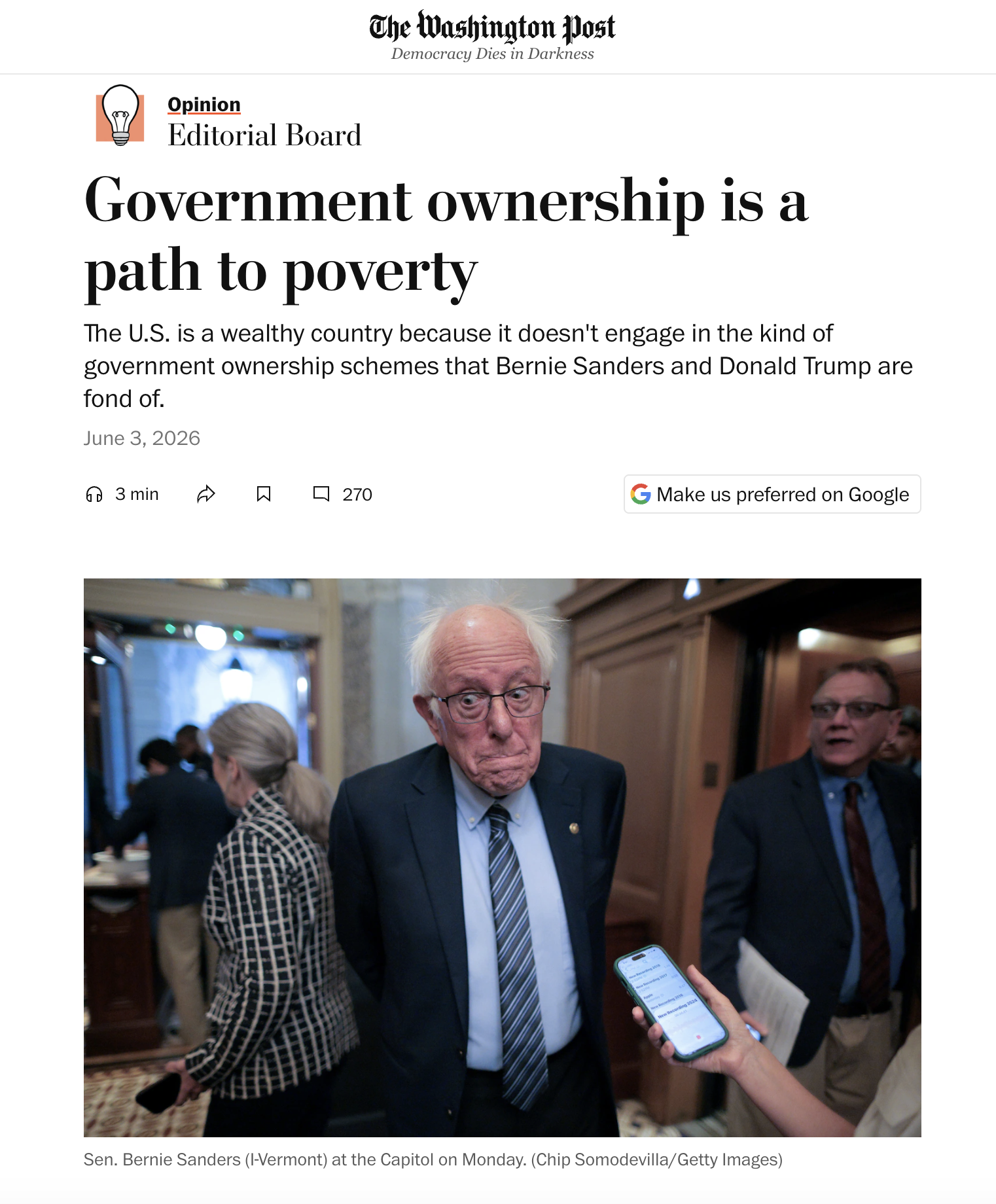
Looking at the world we find ourselves in, I find it inconceivable that a surprising majority, especially in the legacy media, are still entertaining the fantasy that we are in a liberal utopia á la the 1990s or 2000s. The discourse from that bygone age is still abundant. I can’t help but wonder how long this drowsiness is going to last.
Palantir CEO Alex Karp on @BernieSanders’ proposal to take a 50% ownership stake in AI companies: “In 2 years, people won’t think Bernie Sanders is progressive.” “They’ll be like—Bernie, you only want 50%?” “We’re absolutely headed in that direction.” Via @CNBC
There are a lot of differing interpretations as to when it became impossible to ignore the constitutive internal contradictions of the post-1991 unipolar globalizing liberal world.1 For a systematic thinker, it would be merely engaging in the histoire événementielle2 to point to a single event and say: “here is proof that the ‘liberal democracies’ in place are structurally unable to solve the underlying problems!” It is nevertheless, instructive to do so.
For someone like Peter Thiel for example, this event was 9/11. This is how he starts his famous essay “The Straussian Moment”:
The twenty-first century started with a bang on September 11, 2001. In those shocking hours, the entire political and military framework of the nineteenth and twentieth centuries, and indeed of the modern age, with its emphasis on deterrent armies, rational nation-states, public debates, and international diplomacy, was called into question.3
I don’t think it is wrong to infer that by saying “called into question” Thiel means the emergence of a state of exception in the sense used by Carl Schmitt. This informs much of his later thinking.
The real rupture that finally exposed the rotten core of the whole system however, did not come in the form of terrorists from the periphery of the global system. Instead it came from the central node underwriting the whole thing: the dollar-based credit system, whose potential collapse threatened to blow up the whole world economy. It was this interlocking matrix of international capital, the dollar-based financial system on which the entire world economy had come to run, whose sudden seizure meant that no country could be shielded from the financial crisis originating in the North Atlantic.
Capital Unhinged - The Real Rupture
To understand the story of the dollar-based financial system one needs to go all the way back to 1971. On the 15th of August of that year, in perhaps one of the most consequential moments of the last century, Richard Nixon announced to the world that the United States was unilaterally abolishing the convertibility of the US dollar to gold. Nobody had consented to this. (yet another reminder of how economics is embedded in the architecture of raw political power). The world pre-1971 was a world of relative stability. The post-war monetary system which we term Bretton Woods was predicated on a specific promise the US had made: That any foreign central bank could redeem dollars for gold at $35/oz. So why did Nixon announce on one August day that the USA would no longer honour that promise?
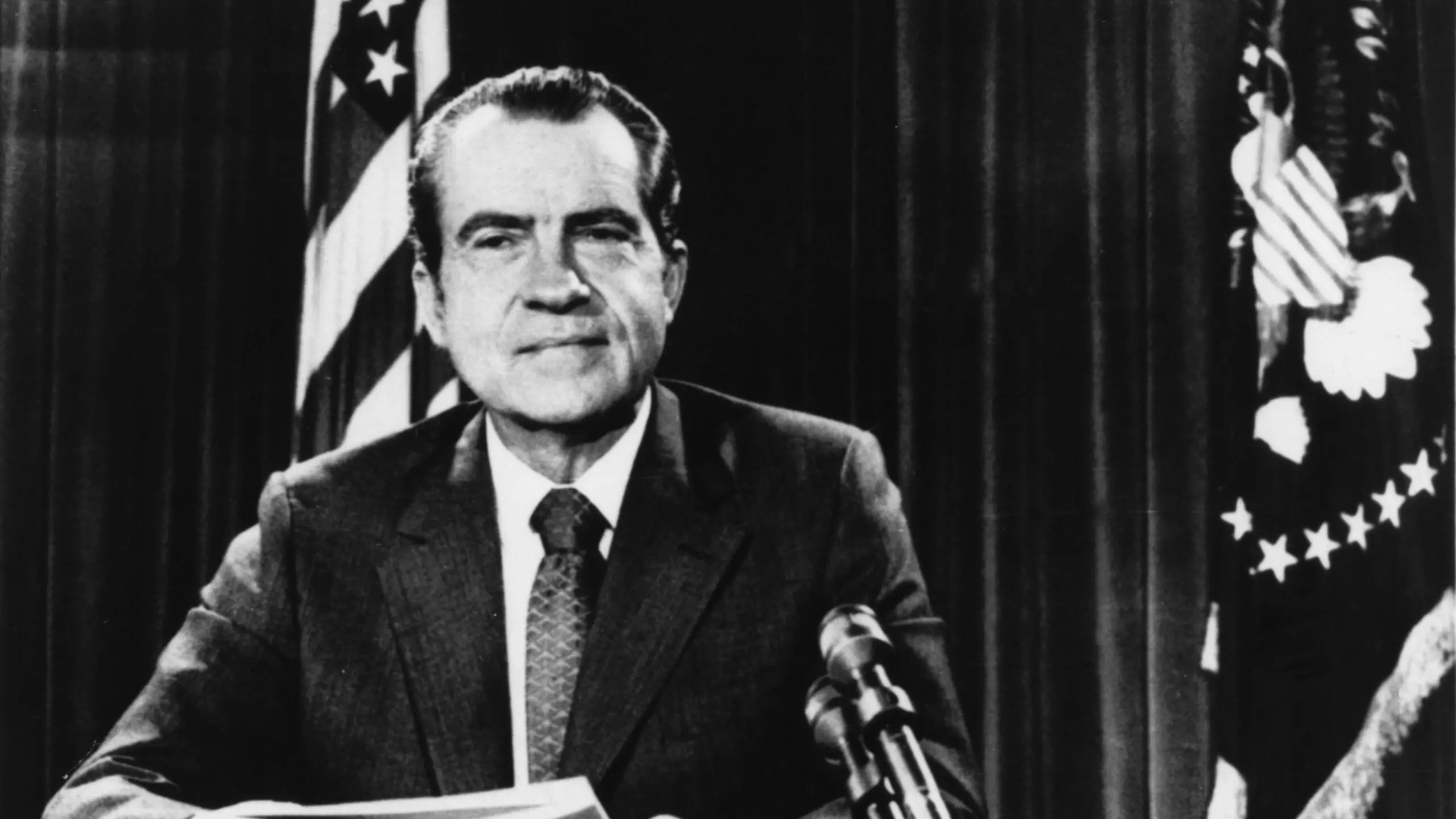
This topic is one of the most discussed out there so I will spare the minutiae. Those interested can delve into that rabbit hole. What is relevant for this story however is what followed after. Once the US Dollar was no longer tied to physical gold, two things happened.
By 1971, foreign official dollar holdings were multiple times more than US gold stock at Fort Knox — roughly 50+ billion in foreign-held dollar claims against about 10 billion in gold. So in a sense the US had defaulted on its debt4. Instead it said to its creditors that the dollars they lent to the US are now backed with more US dollar instead of physical gold.
Once the gold peg died in 1971, currencies of the world started to float. This combined with autonomous monetary policy of individual countries meant that the capital controls that kept international capital from free circulation had dissolved. The consequences of this unhinging of capital cannot be overstated. And eventually this made possible the intertwining of the financial institutions of the world.
The meandering road that led from August 1971 to the Global Financial Crisis is one that I won’t attempt to summarize here, suffice to say that in the decades that followed, allowing capital to move freely has resulted in grave financial interdependencies. Systemically important financial institutions around the world grew into a symbiotic relationship. Adam Tooze recounts how this happened masterfully in his 2018 book Crashed: How a Decade of Financial Crises Changed the World. Now you might ask what all this has to do with the title of the essay. For that we need to take a closer look into what actually transpired in 2008 and how the same mechanism is unsurprisingly playing around the question of the nationalisation of AI companies.
The Nationalization of American Financial Capitalism
On one hectic Monday morning during the momentous days of that October of 2008, the CEOs of America’s nine largest banks received a call from the US Secretary of Treasury Hank Paulson. He was summoning all of them to Washington with less than a day’s notice. He did not disclose any agenda. Global financial capitalism was in dire straits.
A month prior, Lehman Brothers, one of the major investment banks, had collapsed, threatening to bring down the whole edifice with it. It was a perfect storm where reckless lending practices especially with respect to the securitized lending of subprime mortgages, complacent rating agencies, faulty oversight of regulators, the intertwined balance sheets of the global financial institutions had all erupted in a severe liquidity crisis that brought down the giant bank. The collapse sent shockwaves around the world. If Lehman was down, all the major systemically important financial institutions around the world were in danger. They had all been inadequately capitalized and they were well aware that they were structurally unable to weather a liquidity crisis that brought Lehman down. US government, on the other hand, was also painfully aware of the gravity of the situation after it was too late. The panic was so severe that Timothy Geithner, who was the head of New York Fed at the time recounts that Paulson counted “ATMs not working, bread lines for a generation” among the possible scenarios.
Expectedly, the CEOs were in no position to refuse. When they arrived in D.C. they were received by Ben Bernanke, then-chair of the Fed, Tim Geithner, Hank Paulson and FDIC (Federal Deposit Insurance Corporation) chair Sheila Bair.
Each CEO was handed a one-page term sheet: the Treasury would buy preferred stock in their bank. The bankers were baffled. This was effectively nationalising the heart of American financial capitalism! But what was truly baffling was how advantageous the terms offered by the Treasury to the bankers were! It was as if the bankers were being rewarded for their reckless behaviour with the American taxpayer bailing them out. They even outrageously inquired whether they could give themselves the extravagant year-end bonuses! Not coincidentally, the secretary of treasury Mr. Paulson himself was also an alumnus of Goldman Sachs whose CEO was sitting across from him in the room. So much for financial capital- US Government symbiosis. Not for nothing were critics calling Goldman Sachs 'Government Sachs. In Tooze’s narration:
Beyond the general sense of shock, the reactions came down to business logic. For the weakest in the group it was evidently a great deal, and Vikram Pandit of Citigroup said so. Given the state of his balance sheet, he couldn’t afford to be fussy. As he blurted out: “This is cheap capital.” Indeed, it was. The yield on Citigroup bonds that day was 22 percent. Paulson was asking for 5 percent. A better-placed bank, like J.P. Morgan, could have got by without the TARP money. But Dimon understood the systemic logic and was among the first to sign, though he made his signature conditional on the rest of the group agreeing. It was California’s Wells Fargo that forced the government side to show its hand. When Wells objected to bailing out New York banks, Paulson coolly pointed out that Wells Fargo was sitting opposite its regulator. If they did not take the capital on offer that afternoon, they would be notified the following morning that they were undercapitalized. They would find themselves locked out of capital markets. When they came back to Paulson for help, the terms would be less attractive than those available that afternoon. The CEOs were then dismissed to call their boards. Within a matter of hours they had all agreed. Under the Capital Purchase Program facility, America’s nine largest banks took $125 billion in preferred stock from the government 5
and more tellingly:
Advocates of strong executive branch prerogatives would later celebrate these actions as an essential assertion of sovereign authority. As it had done after 9/11, the American state had declared a state of exception and it had risen to the occasion.
This is almost purely a textbook Schmittian definition of sovereignty, as one who decides on the state of exception. 6 The sovereignty of the United States had flexed its muscle to socialize the losses of the bankers to the general public while sanctioning the bankers to retain their earnings privately.
A rightly indignant Nassim Taleb wrote:
The bailouts of 2008–9 saved the banks (but mostly the bankers), thanks to the execution by then-treasury secretary Timothy Geithner who fought for bank executives against both Congress and some other members of the Obama administration. Bankers who lost more money than ever earned in the history of banking, received the largest bonus pool in the history of banking less than two years later, in 2010. And, suspiciously, only a few years later, Geithner received a highly paid position in the finance industry.
That was a blatant case of corporate socialism and a reward to an industry whose managers are stopped out by the taxpayer. The asymmetry (moral hazard) and what we call optionality for the bankers can be expressed as follows: heads and the bankers win, tails and the taxpayer loses.7
Things became even more unbelievable six months later as the same CEOs are called once again to Washington this time by a furious President Obama. The President was acting on very justified anger on behalf of the public. The reason was that instead of redeeming the trauma caused by the bailouts of 2008 the top bankers had helped themselves to a whopping 18.4 billion dollars.
Meanwhile, rather than recognizing the political trauma caused by the 2008 bailouts, the bankers in their self-satisfied insulation continued to help themselves to the lion’s share of whatever revenue they generated. “That was two and a half times the amount that Congress approved for the president’s priority of modernizing America’s broadband infrastructure. Alternatively, if it had been retained by the banks, it would have made a substantial contribution toward their recapitalization larger.8” Particularly baffling is the case of the insurer AIG. The department that had blown the 61.7 billion dollars announced they were receiving 165 million dollars in bonuses, possibly rising to 450 million. Obama could not deflect the public’s anger. The public was expecting some form of justice being imposed on the bankers. The “Swedish Case” was being discussed openly, where, following its 1992 crisis, Sweden nationalized failing banks and wiped out the shareholders.
I once again turn to Tooze’s writing to relate what actually transpired:
When Obama confronted the bank CEOs on March 27 the atmosphere was frosty. But he had summoned them to Washington not to punish them but to remonstrate with them. He appealed to the bankers to show restraint in their compensation and bonuses. “Help me help you,” the president pleaded. When several of the CEOs offered the customary justifications for their exorbitant compensation—their businesses were large and risky; they were competing in an international talent pool—the president interrupted in exasperation: “Be careful how you make those statements, gentlemen. The public isn’t buying that. . . . My administration is the only thing between you and the pitchforks. In the spring of 2009, rather than going over to the offensive, Obama and Geithner positioned themselves as the last line of defense for America’s financial system. It was their self-appointed mission to calm “the mob.” … To the amazement of the hardened Wall Street deal makers, the only item on the table on March 27 was voluntary restraint on compensation. That was even less than Paulson had asked for six months earlier when he foisted TARP on them.9
So in the room where it happened, the president who summoned the CEOs to ostensibly set right the outrage expressed by the public had actually pleaded to them saying “help me help you”! He also frankly said to them he was the only thing between them and the pitchforks. Doesn’t that unequivocally settle the question: “For whom does the state exist?” or “whose state is it?” And may I also pose the question: where is the so called liberal capitalism in action during the handling of the key turning points of this whole crisis? Reading the accounts of the rooms where it happened, I would even say that socialism for the rich is an unfair critique as it doesn’t even remotely convey the moral hazard that shielded those responsible.
Let’s now fast forward to 2026, nearly a generation from the crisis-laden days of 2008. In the wake of the crisis the banks were subjected to heavy regulation when it came to leveraged lending. And what did they do? They did not, of course, abandon the practice. They retreated to arranging and distributing leveraged lending to other actors to whom less stringent capital regulations applied. The actors in question are asset managers that have already become household names - the likes of Blackrock, Blackstone, Apollo, Blue Owl and so on and so forth. Hence the explosion of private credit as an asset class. Here’s how the whole thing works in a nutshell. An asset manager like Blackrock raises a fund from institutional investors — pensions, insurers, sovereign wealth funds, increasingly retail — and lends that money to companies, a role previously assumed by the banks. The manager makes the decisions and collects fees; the investors bear the credit risk. Loans are floating-rate, illiquid, and valued quarterly by the manager rather than priced daily by a market. So effectively the volatility, or risk if you like, becomes harder to observe, because, as the name suggests, it is a private market! The industry is expected to grow to a staggering figure of 4.5 trillion dollars by the end of the decade.
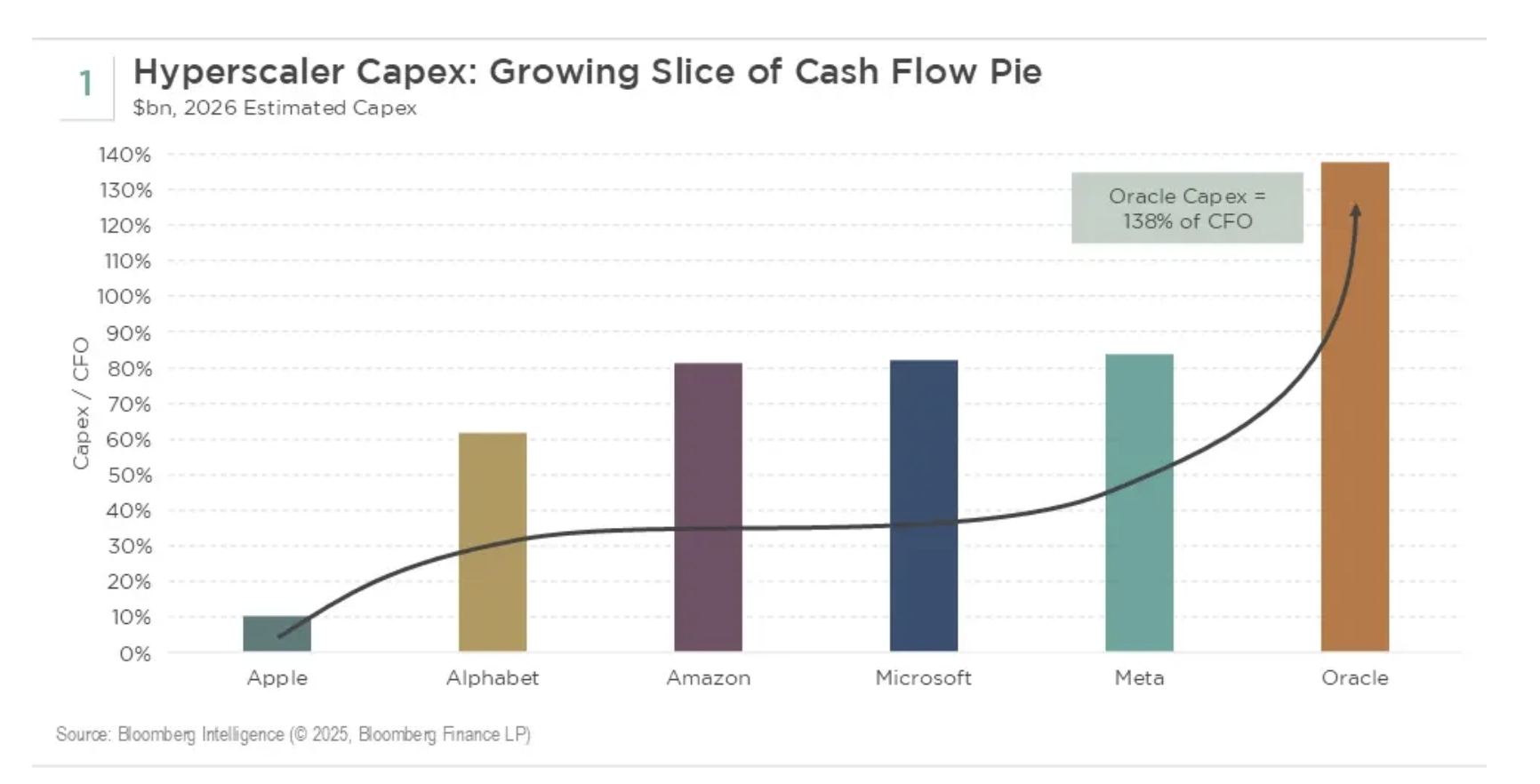
One would expect that after such a traumatic crisis American finance would operate completely differently to never again have another 2008. Yet if we look at some of the conspicuous headlines from the past months such as, “Investors beware the dangers lurking in private credit” , What is private credit, and should we be worried by the collapse of US firms, It’s An Early Phase Financial Crisis: The Private Credit Bust, there is ample cause for alarm. What further complicates the picture is that the AI capex boom is increasingly and disproportionately financed by private credit. Considering that the entire US economy is one big bet on AI at this point, one wonders: what could go wrong?
One of the best commentators on the 2008 crisis, Gillian Tett, warns on her FT column as:
However, there is another lesson from history that Wall Street should heed: when other sectors have been forced to clean up their standards in the past, this has almost invariably occurred after, not before, a big crisis hits. Painful losses are what usually sparks reform. Maybe private credit can buck this trend — and reform itself before, not after, a bubble bursts. But this will probably only happen if institutions such as JPMorgan and BlackRock campaign for change. Don’t expect the Trump team to protect investors without such strong pressure; caveat emptor is now the mantra of the day. Anyone entering the private credit dance should be warned.10
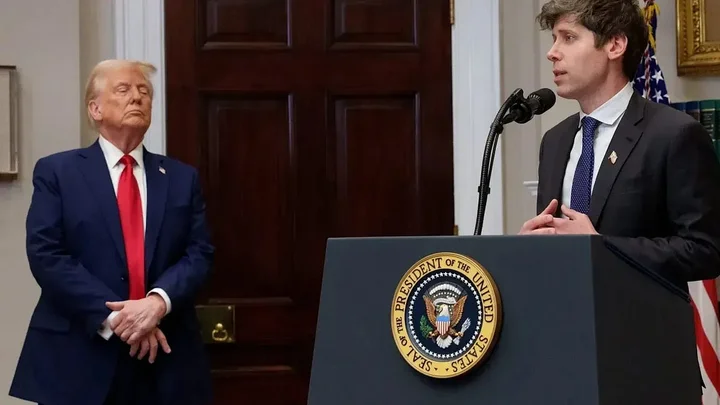
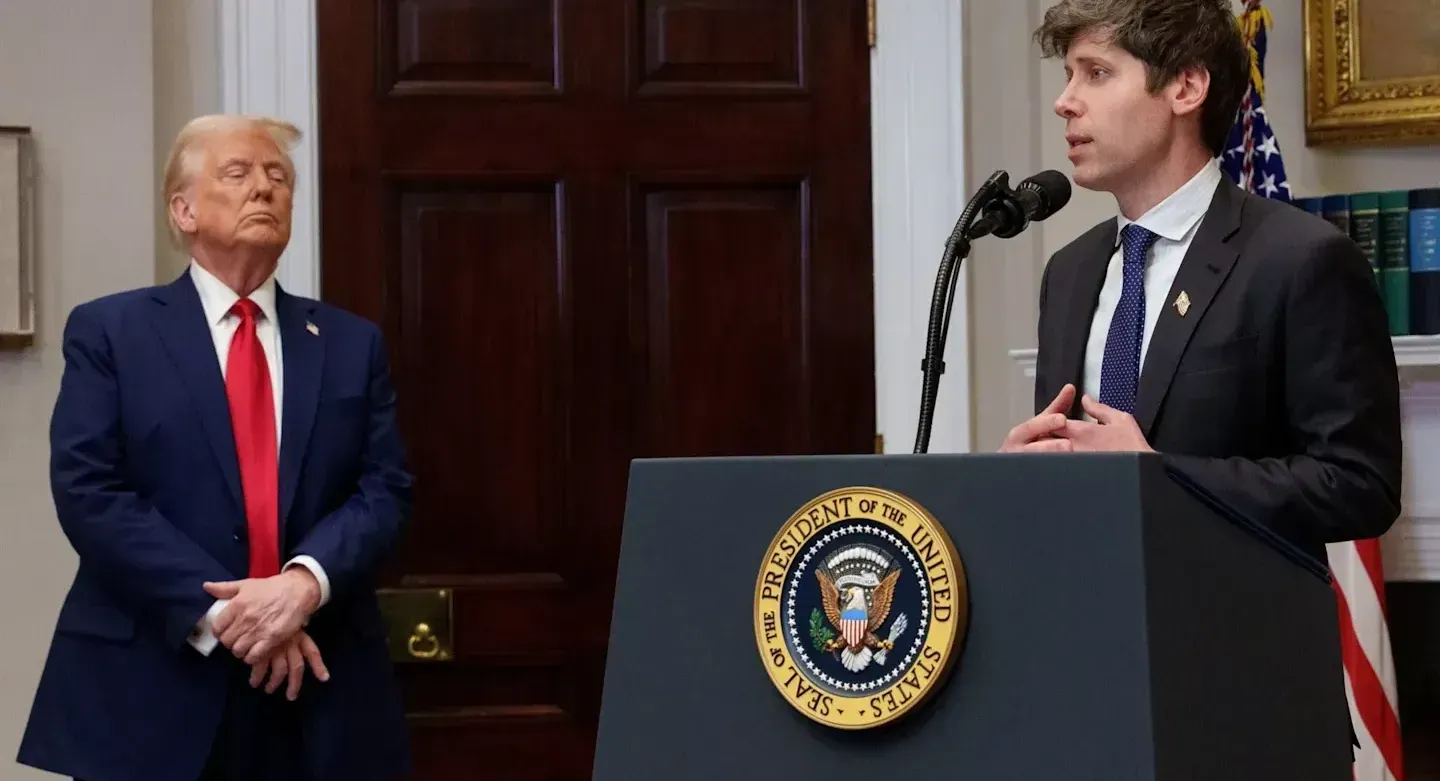
Now, imagine a wily figure, let’s say Sam Altman for convenience, who is very well aware that he operates under a government that set a precedent with the bank bailouts of the sort described above. Why would he, or anyone in the AI landscape for that matter for they are surely smarter than the reckless financiers, wait for the bubble to pop for the government to bail them out and socialise the losses? Better to get the government behind you in advance.
Postscript: the Federal Reserve as the éminence grise of the world
It would be remiss of me not to mention the most decisive innovation, or a revelation I should say, yielded by the 2008 crisis. It was not only the US banks that were in dire need of liquidity injection. In other countries, the major financial institutions had gross US dollar liabilities on their balance sheets. Because the dollar was unlinked from the gold standard, as relayed above, the US effectively permitted banks from abroad to credit US dollars. This is in principle what is termed as a euro-dollar. But when push came to shove and these banks could not access dollar liquidity when global credit dried up, there was a real problem. The sovereign nations needed to recapitalize their banks so that they could save their finances. But there is a caveat, after all, not every country except the US can create dollars at will. The way out of this conundrum was designed under the technocratic shroud of the Fed. It was given, on purpose, a highly technical name “swap lines”.
It worked in practice like this: The Fed sends the ECB, say, $50 billion; the ECB sends the Fed the equivalent in euros as collateral. They agree to reverse the transaction later when the danger passed, at the same exchange rate, with the ECB paying a bit of interest. The ECB then lends those dollars to European banks that owe dollars and can't borrow them anywhere. That's pretty much it. If it sounds complicated it was made intentionally so precisely because: through the deployment of this swap line Fed basically had the power to give a credit lifeline to other countries at will. So thanks to the global financial crisis, the Fed discovered that it had perhaps the most powerful geopolitical weapon in its hands. Fed lacked any form of democratic legitimacy to make decisions on matters of utmost geopolitical importance such as this.
To whom one extends swap lines” is as much a “foreign policy as economic decisions. The Fed was well aware that with the swap lines it was treading onto the terrain of geopolitics. Each of the fourteen European, Latin American and Asian central banks included in the swap network was approved by the Treasury and the State Department.11
…when Bernanke was challenged by campaigning Democratic congressman Alan Grayson of Florida to explain “who got” the swap line money, the chairman of the Fed could reply “I don’t know. The ultimate destination of the trillions of dollars that had flushed back and forth between the central banks of the global system was not under direct American oversight.12
Countries excluded from the swap line club by the Fed had go to the IMF and accept humiliating austerity measures which they had to foist on their citizens. and conditions Hungary and Ukraine are among the countries excluded. What happened to the two in the aftermath is quite a cautionary tale to say the least. But I’ll leave it there as this deserves another essay on its own.
For the sake of rigorous argumentation, it is important to stress that I use the terms liberal democracies, liberal capitalism, unipolar world system interchangeably in this context. These all refer to the economic system advocated by the self-avowed liberal democracies of the western hemisphere that pushed for the expansion of free market capitalism and private enterprise and global economic integration in the wake of the cold war.
the term comes from the legendary historian Fernand Braudel. For Braudel salient events/personages of history fall under this. they are the surface phenomena caused by the slow-moving tectonic motions of structural dynamics.
Thiel, Peter. “The Straussian Moment.” In Politics and Apocalypse, edited by Robert Hamerton-Kelly, 189–218. East Lansing: Michigan State University Press, 2007.
the case for US default is articulated really methodically in the 2009 book This Time Is Different: Eight Centuries of Financial Folly by Carmen Reinhart and Kenneth S. Rogoff,
Tooze, A. (2019). Crashed: How a decade of financial crises changed the world. Penguin Books. pp. 206
For a more detailed Schmittian exploration of the episode see: The Executive Unbound: After the Madisonian Republic (Oxford: Oxford University Press, 2011).
Tooze, A. (2019). Crashed: How a decade of financial crises changed the world. Penguin Books. pp. 303
Tooze, A. (2019). Crashed: How a decade of financial crises changed the world. Penguin Books. pp. 308
Tooze, A. (2019). Crashed: How a decade of financial crises changed the world. Penguin Books. pp. 232
Tooze, A. (2019). Crashed: How a decade of financial crises changed the world. Penguin Books. pp. 226