a disclaimer: this piece is written also in the broader context of the revisionist historiography around what is commonly called “the Counter-Reformation”. The verdict is that it wasn’t all bad, and The Reformation wasn’t all good.
If you are someone like me, who sometimes has an outrageous amount of screen time accumulated on X. And if you are also compulsively following the contemporary debates on AI, you also might have been somewhat fatigued by the abundance of analogies likening our times to the Reformation period or the period in the aftermath of the introduction of the printing press. The examples are too many to cite one by one.12
The printing press broke the monopoly of the Catholic Church. It led to the Reformation, 100 years of religious war. And finally the birth of the nation-state. Data and AI platforms are breaking the monopoly of the nation-state. It breaks a shared reality and time to build.
The reason I was hesitant to make the same historical analogy was not that there weren’t strong resemblances. Indeed, I also see a lot of common historical parallels with the Reformation period and the age of the LLMs but the reason I was hesitant had less to do with the proliferation of seemingly intelligent LLMs than with the response of the Church itself. A historical comparison with the Reformation period, only through the lens of a new revolutionary technology (the printing press in the case of the reformation) without scrutinizing the rupture it causes within the Church is only a half-complete analysis at best.
Can we argue that the institutional reflex that convened the Council of Trent (1545) is analogous to the one that prompted Pope Leo’s Vatican to publish the Encyclical
Historical phenomena are complicated to decipher. Reformation and the Counter-Reformation however are notoriously so. Even the terminology is disputed, with some scholars preferring to use the term Catholic Reformation instead of Counter Reformation and with good reason. The term Counter-Reformation has a lot of subsequent Protestant propaganda embedded in it. As with any historical revolution, the victorious actors who are precarious in their hold of victory have every incentive to go after the preceding period in an iconoclastic manner. The examples are abundant. Just think of that time of intellectual flowering and creativity that is the Late Middle Ages. It was for a long time known academically as the Dark Ages.
To make sense of the Counter-Reformation, the first thing that one should remind oneself is that it was principally a reaction. This is the point the great Fernand Braudel also stresses repeatedly in his exuberant book “Out of Italy” which I cannot recommend highly enough. It is a wonderful account of how the tectonic forces, the longue durée, of history is deduced from the flamboyancy of the Italian Baroque, the commedia dell’arte. The book is replete with all the extravagant characters of the age: musicians, architects, painters, sculptors, goldsmiths, theater companies, directors, dancing-masters, and astrologers. It is what the French call “le génie italien” at its apotheosis. Although “Italien” needs to be put in double quotes as it is still a patchwork of city states then.
The Counter-Reformation was a cause but it was also an effect. Where did it come from? If theologians had begun to trespass on the territory of others, as they were correctly accused of doing by an eminent Italian who emigrated to England, it was not simply by their own initiative and free choice. They were as much acted upon as actors in this drama.3
Braudel goes on to discredit the view of the Counter-Reformation as an intellectually repressive contrarian push. In fact, he argues for quite the opposite. With characteristic use of ample historical evidence. The emerging picture is that it was a desperate reaction, a rear-guard action if you like, to preserve the cosmic and the temporal order of the 16th century Europe. What was at stake was nothing less than the preservation of the final vestige of the medieval aspiration to universality. Henry Kissinger, who was also obsessed with the period, describes it as such:
a concept of world order that represented a blending of the traditions of the Roman Empire and the Catholic Church. The world was conceived as mirroring the Heavens. Just as one God ruled in Heaven, so one emperor would rule over the secular world, and one pope over the Universal Church.4
The Catholic church was well-aware that any dissolution of the realms of this Holy Roman Empire does not happen in a bloodless manner. And indeed that was what happened. Enabled by the adoption of printing press at scale, every rebellious prince within the Empire could launch their own personal theology and thus a claim to sovereignty. This as expected, was highly disruptive to the fragile order of the empire. The resentful princes and minor nobility within the complex patchwork of the Holy Roman Empire had thus the motive and the means to escalate things until everything imploded in a Girardian violence.
The Catholics in response set in motion an attempt of a great institutional response to prevent the collapse of medieval unity. It was this unity under one church, this balance between earthly rulers and the Pope that had defined the post-Roman empire governance of the continent. It is this desperate motion that turned out to be what we called “The Counter-Reformation”. The Vatican still hoped that transcending the religious discord would restore peace and stability. But it was too late. The wheels of an irreversible rupture had already been set in motion when an Augustinian Monk named Martin Luther nailed his 95 theses to the door of the Castle Church in Wittenberg. While Luther’s main disputations with the Vatican stemmed from wide-spread malpractices like the indulgence system or the rampant corruption, the events escalated beyond his control. If Luther’s theological theses were the match that ignited the fire, the gunpowder was the multitudes of Ressentiment-filled, politically ambitious princes of the empire. And they had one deadly weapon with which they fanned the flames. It was the newly scaled-up technology that was the printing press. So every prince could theoretically publish their break from the Vatican. And they indeed used it to deadly effect.
The internal reformers within the Vatican on the other hand were acknowledging the fact that there were grave corruptions in the administrative, moral, and disciplinary architecture of the church; the case of the indulgences being the most notorious. Here we should also bear in mind that what made Catholicism survive for so long is that it is inherently self-correcting. Tom Holland puts this self-correcting mechanism within the Roman Catholic Church’s DNA nicely, liking these self corrective bouts to periodic earthquakes:
it’s like Christian civilisation is built on a San Andreas Fault. You know, we raise these incredible structures and we do it in a [belief] that we’re being true to ideals of charity and so on; but, as is always the way, these ideals atrophy and the skyscrapers go up and the poor get shoved out to the [margins] – and then there’s a massive convulsion and everything falls down, and so the cycle goes on.I think this is what happened in the 11th century, I think it happened in the Reformation,5
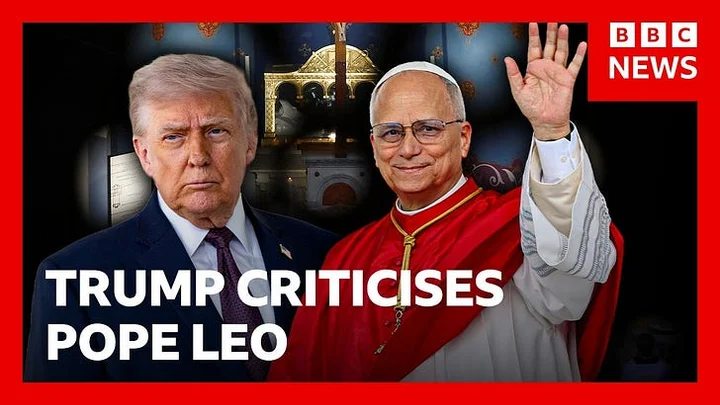
For those interested, Tom Holland’s book Dominion is an exquisite account of this recurrent revolutionary wave in Catholicism. He argues convincingly that the subsequent revolutions in Western History, such as the French or the Russian, even the Woke movement, are as a template directly modelled after the most successful revolution ever made. The revolution in question was the Gregorian Reforms of the 11th Century. Pope Gregory VII had had enough of a mighty emperor bullying the virtuous men of God into submission. His revolution had at its core one of the key messages of New Testament: “Blessed are they which are persecuted for righteousness’ sake: for theirs is the kingdom of heaven.” 6 It was the weak, the poor, the unarmed that were the morally righteous and not the worldly rulers who were deemed illegitimate. This dispute between Pope Gregory and the Holy Roman Emperor Henry IV ended when the emperor went all the way to Canossa, where Pope Gregory was waiting for him, and knelt down in the freezing snow and asked for his forgiveness. An uncompromising moral standing had bent the will of the most powerful man of the world. The reverberation of this dynamic down centuries all the way down to our post-Christian world, we see in the recent disputes between the Pope and President Trump.
BREAKING: President Donald Trump attacked Pope Leo XIV on social media, saying the pope should “stop catering to the Radical Left," extending the feud over the Iran war with the first American pontiff.
In Tom Holland’s prose:
That sins should be washed away; the mighty put down from their seats; the entire world reordered in obedience to a conception of purity as militant as it was demanding: here was a manifesto that had resulted in a Caesar humbling himself before a pope. ‘Any custom, no matter how venerable, no matter how commonplace, must yield utterly to truth—and, if it is contrary to truth, be abolished.’ So Gregory had written. Nova consilia, he had called his teachings—‘new counsels’.
A model of reformatio had triumphed that, reverberating down the centuries, would come to shake many a monarchy, and prompt many a visionary to dream that society might be born anew. The earthquake would reach very far, and the aftershocks be many. The Latin West had been given its primal taste of revolution.
So are we in a “Counter-Reformation Moment”?
Now lets return to our times. Before making the case whether we are in a “Counter-Reformation Moment it is very important to stress that this has not been the only Papal Encyclical that calls for caution against the societal consequences of a new technology shoved onto society by the capitalists.
Rerum Novarum and the horrors of the Industrial Revolution
Rerum Novarum was the name of the papal encyclical issued by Pope Leo XIII, the namesake of the current pope, in 1891. It literally translates as “of new things” or “concerning revolutionary changes” but the main focus of the encyclical was “On the Condition of Labor”. It was the response of the church to the Industrial Revolution’s “dark Satanic Mills” to use William Blake’s famous description of the mills grinding down the masses of the workers. The encyclical contains a lot of sections on the dignity of labor, the right to a just wage and the duties of individual states towards the poor and so on. Having said that, lets look into the latest encyclical published by the latest Pope Leo XIV last week entitled:
Magnifica Humanitas:“On Safeguarding the Human Person in the Time of Artificial Intelligence.”
The document is a highly peculiar one in that it combines a genuine moral stance, one laden with compassion, with a thorough understanding of frontier AI technology. It is a language distinct from those of the tech lords of the Valley. Look at this section for instance;
Breaking the chains of new forms of slavery
This distorted view of the human person is reflected today in various forms of servitude directly linked to the digital economy. Nothing in the world of AI is immaterial or magical. Every seemingly immediate and flawless response is the result of a long chain of mediation, involving vast networks of natural resources, energy infrastructure and, above all, people. A significant part of the digital economy’s functioning relies on the silent work of millions of people engaged in essential yet largely unseen activities, such as data labeling, model training and content moderation, often involving disturbing material. In many cases, these workers are young people, predominantly women, working under demanding conditions for minimal wages. Added to this invisible labor is the even harsher work of extracting the resources required for the production of the devices and microprocessors on which AI depends. In some regions of the world, children and adolescents work in dangerous conditions, crushing the materials from which rare earth elements are extracted. The bodies of these people are scarred, injured and worn down so that computational flow may continue uninterruptedly. Furthermore, criminal networks use online platforms, messaging systems, anonymous payment methods and profiling techniques in order to recruit, control and transport victims of trafficking — very often minors — reducing men and women to “data” to be tracked and “packages” to be moved around within the same digital circuits that support much of the global economy. This reality deeply challenges the moral conscience of our time. It is not enough to invoke efficiency, nor to celebrate the benefits of innovation, if they are built on a chain of exploitation that remains deliberately hidden. If technology promises emancipation, yet produces new forms of global subordination, it stands in contradiction to the fundamental principle of human dignity.7
The document also weighs in on the debates around transhumanism and post-humanism which are getting a lot of traction in the Silicon Valley. Here perhaps the credit is due to Father Paolo Benanti. He is a Roman Franciscan friar with an engineering background who is really active in the debates around AI. He is currently advising the Pope on all matters AI. There is something of a kernel of hope in the picture of a Franciscan Friar with his Franciscan robes attending AI conferences next to the usual cast of the billionaires.
So for a moment in our mind’s eye lets replace the unruly princes of the 16th century Holy Roman Empire, who were mostly opportunistic and greedy and ambitious upstarts, with the tech lords of 2026. Take Maurice, the Duke of Saxony for example. He was initially a Duke of the empire loyal to Charles V. He then sided with the Reformation and then switched sides back to the Catholic camp of Charles V and then back to the Protestant Reformers. His cunning and political maneuvering earned him the titles Prince-Elector and Arch-Marshal of the Holy Roman Empire. It is not very hard to mentally replace aspirant sovereigns like him with tech princes the likes of Sam Altman and co. The relationship of tech-overlords with Catholicism is also eerily reminiscent of the relationship of the princes of the 16th century empire with Catholicism. Just look at how quick figures like J.D. Vance go from flaunting their Catholicism when it is pragmatic to do so to scolding the Pope on matters of theology. Or look at the recent obsession of the parvenus of the Silicon Valley. Converting their economic capital to cultural capital. There is a copious amount of “taste” discourse coming out from those milieus. While the term is ambigous, it refers to some kind of a differentiating signal. They refer to some kind of cultural capital apparently.
taste is a new core skill
Again, how is this different than the upstart princes armed with their printing presses going about mass producing pamphlets trying to showcase their cultural capital as well while they are vying for more power.
As I said in the beginning, the parallels are too many to enumerate with the Reformation period. In this essay, I propose that the reaction from the Church has also striking similarities to the reaction that produced the “Counter-Reformation”. Thus, by also accounting for the missing leg, it is I argue, apt to make the historical analogy with the Reformation period and say that we could indeed be living through a “Counter-Reformation Moment”.
Doctrine is not enough, where are the jesuits?
I am well aware that to make a case of a historical analogy is different than pontificating on what it entails, which is the harder of the two. I do however, want to pose a thought-provoking question that comes with this analogy I have argued for above.
“If we are indeed living through the Counter-Reformation Moment, where are the Jesuits?”
The famous, or the infamous, Jesuits are one of the world’s most puzzling religious orders. They are a Catholic religious order founded by Ignatius of Loyola and his companions. Loyola was a former soldier in the service of the Spanish crown who underwent a strong spiritual crisis during a period of convalescence from a battlefield wound. The order he founded afterwards, with the help of his martial disposition, rose up to the monumental challenge of trying to contain the disruptive forces unleashed in the aftermath of Reformation. Although they were a religious order like the Dominicans, they were not your usual monks sitting in monasteries. They were explorers, cartographers, philosophers, theologians, educators, navigators, you name it. Not for nothing were they called the Pope’s shock troops. They were made for a world in crisis, a world in deep fragmentation. The wave of disinformation that the Reformation unleashed with everyone able to print and distribute their writings, again very much reminiscent of the age, propelled Jesuits to devise a whole new education system designed to counter the effects of this rampant disinformation. The institutional model of education founded by the Jesuits, with a commitment to intellectual rigor above all else, produced some of the brightest, most prolific minds. Among some of the diverse intellectual behemoths raised through the Jesuit schools are René Descartes, Voltaire, Denis Diderot, James Joyce, Alessandro Volta, Michel Foucault. The Jesuits’ commitment to intellectual rigor led them to also raise the best adversaries against themselves. An avowed atheist like Voltaire or Michel Foucault were raised with a Jesuit approach to reasoning.
So to end on a provocative note, if with the Magnifica Humanitas we have a Counter-Reformation Moment, who are the shock troops, the Jesuits of our times as it were, to enforce it?
Zekveld, Nathan,Artificial Intelligence: The End of the World as We Know it?, 2025
Horton, Michael S., AI and Silicon Valley’s “Spirituality Without Religion”, Modern Reformation, 2026
Braudel, F. (2019). Out of Italy: Two centuries of world domination and demise (S. Reynolds, Trans.). Europa Compass, pp. 151.
Kissinger, Henry. Diplomacy. New York: Simon & Schuster, 1994., pp. 57
Tom Holland, The Power and the Glory, 2020, https://highprofiles.info/interview/tom-holland/
Matthew 5:10, NIV
ENCYCLICAL LETTER MAGNIFICA HUMANITAS OF HIS HOLINESS POPE LEO XIV ON SAFEGUARDING THE HUMAN PERSON IN THE TIME OF ARTIFICIAL INTELLIGENCE, May 2026, paragraph 173